
Robotic joint replacement is expanding rapidly across India. Hospitals are acquiring systems. Surgeons are adopting platforms. Marketing narratives are multiplying.
But technology alone does not create surgical excellence.
What differentiates true leaders in robotic joint replacement is not access to a machine, but the disciplined integration of precision technology with refined surgical technique and measurable recovery pathways.
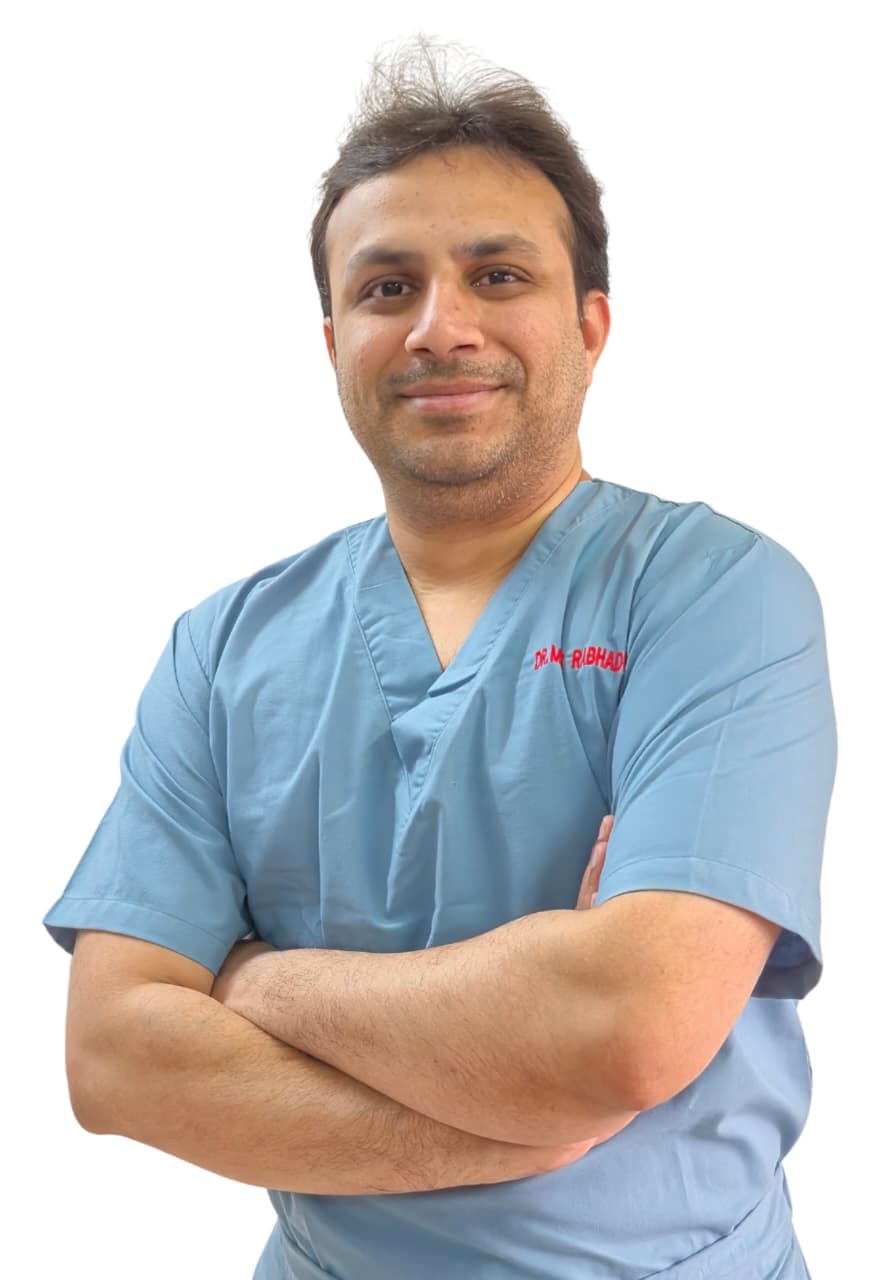
Among the surgeons contributing to this shift is Dr. Mayur Rabhadiya, Orthopedic and Joint Replacement Surgeon based in Mumbai, whose work in minimally invasive robotic knee and hip replacement is drawing increasing attention beyond his region.
His surgical philosophy is clear: preserve muscle, restore biomechanics with robotic accuracy, and enable faster functional recovery without compromising long-term alignment.
Mini-Subvastus Robotic Knee Replacement: Precision with Muscle Preservation
Total knee replacement success depends on three non-negotiables: alignment, ligament balance, and rotational accuracy. Robotic systems provide intraoperative data to control these variables. However, early recovery depends equally on how the quadriceps and surrounding soft tissues are handled.
Dr. Mayur Rabhadiya performs robotic knee replacement using a mini-subvastus, muscle-sparing technique. This approach avoids cutting the quadriceps tendon and minimizes disruption of the extensor mechanism.
When combined with robotic intraoperative mapping, the procedure allows:
- Real-time assessment of flexion and extension gaps
- Quantified correction of deformity
- Controlled femoral and tibial resections
- Accurate rotational alignment
- Data-validated implant positioning before fixation
The integration of muscle preservation and robotic precision creates a structured pathway toward early mobilization. Patients commonly achieve early straight-leg raising and assisted ambulation in the initial postoperative period.
While physiotherapy remains essential, the muscle-respecting approach often reduces prolonged dependency on intensive rehabilitation compared to traditional exposures.
The objective is not merely implant placement. It is reproducible biomechanics with minimized soft tissue trauma.
Mini-Incision Robotic Hip Replacement: Biomechanics Over Marketing
In total hip arthroplasty, component orientation determines stability and implant longevity. Small deviations in acetabular cup position can influence wear patterns and dislocation risk.
Dr. Rabhadiya integrates robotic planning with mini-incision, muscle-sparing exposure techniques to ensure anatomical restoration with high precision.
Robotic assistance enables:
- Preoperative digital templating tailored to individual anatomy
- Accurate acetabular cup inclination and anteversion
- Controlled femoral preparation
- Restoration of leg length and offset
- Intraoperative validation of biomechanical targets
The focus is not cosmetic incision size. It is controlled execution.
By aligning robotic accuracy with multimodal pain management and early weight-bearing protocols, patients often experience faster mobilization and shorter hospital stays.
This systemized method reduces variability and enhances reproducibility, two factors that increasingly define high-level joint replacement practice.
GFC Therapy: A Structured Joint Preservation Strategy
Not every patient presenting with knee pain requires replacement surgery. For carefully selected individuals with early osteoarthritis and preserved alignment, Dr. Mayur Rabhadiya offers Growth Factor Concentrate (GFC) therapy as part of a joint preservation strategy.
GFC therapy involves concentrating autologous growth factors and delivering them intra-articularly to support symptom control in early degenerative conditions.
It is considered in:
- Early osteoarthritis without advanced deformity
- Persistent knee pain unresponsive to conservative care
- Patients seeking to delay surgical intervention
Strict patient selection remains central. Biologic therapy complements surgical practice but does not replace joint replacement in advanced structural disease.
This dual capability, robotic reconstruction for advanced pathology and biologic preservation for early degeneration, reflects a comprehensive orthopedic model rather than a single-technology focus.
From Technology Adoption to Surgical Identity
As robotic systems become more widely available across India, differentiation increasingly depends on technique refinement, disciplined execution, and outcome consistency.
Dr. Mayur Rabhadiya’s practice is defined by:
- Routine use of mini-subvastus muscle-sparing robotic knee replacement
- Mini-incision robotic hip arthroplasty focused on biomechanical restoration
- Structured rapid recovery protocols
- Evidence-aligned biologic joint preservation
In a field where perception often precedes proof, sustainable authority is built through repetition of results and consistency of method.
Within India’s evolving robotic joint replacement landscape, Dr. Mayur Rabhadiya is positioning his name alongside precision, muscle preservation, and reproducible recovery-focused surgery.
